This ConneX section of the OSRT Web site is designed to centralize current and relevant information for RTs, Students, and GXMOs. It includes education and employment opportunities and pertinent professional links. Some of the content listed under ConneX is available to members only as a member benefit. A logon screen will appear for the members-only areas.
Students enrolled or seeking enrollment need to understand what "Accreditation" is all about. So, what exactly is accreditation? By Webster's, "accreditation is the act of granting credit or recognition, especially with respect to an educational institution that maintains suitable standards. There are basically two forms of accreditation relative to radiology-related programs--institutional and programmatic.
Colleges, universities, and some private associations are eligible to be accredited if they have adopted sound qualities of education and have developed procedures for evaluating whether or not they are operating at those levels of quality. In Ohio, colleges/universities that seek institutional accreditation fall under the auspices of the North Central Assocation of Colleges and Schools, commonly referred to as the North Central Association or NCA. The specific division within the NCA responsible for accrediting higher education institutions is the Higher Learning Commission (HLC).
Programmatic accreditation, on the other hand, is a special recognition or credential that is awarded to an academic program that leads to a specific degree or credential, such as the accreditation of a radiography or radiation therapy program. Most Ohio-based radiography and radiation therapy programs receive programmatic accreditation through the Joint Review Committee on Education in Radiologic Technology (JRCERT). Program-level accreditation is a way to be sure the program adheres to the established Education Standards.
Have you ever wanted to present at a professional meeting? OSRT offers a mentor program to help you develop your presentation skills. We can help you develop a proposal to present at the OSRT Annual Meeting.
Where would the medical imaging community be if Wilhelm Roentgen, Thomas Edison, or Marie Curie’s career took a different path? These are just a few examples of why scholarship is fundamental to our profession. It moves us forward, not only in developing new technologies to aid in patient care and tr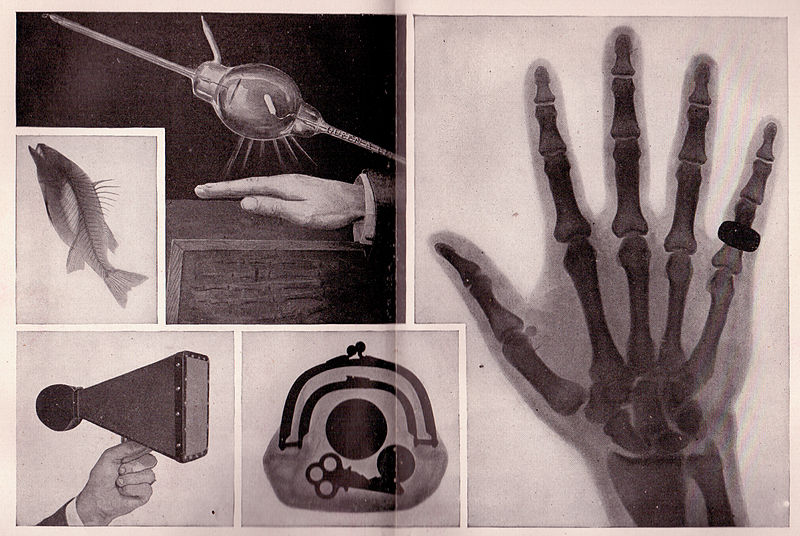 eatment, but it also allows the medical imaging profession to share our knowledge with the rest of the world.
The scholarship of any discipline is defined by the foundational research and writing specific to the practice of that discipline. In other words, research and scholarly inquiry is central to the advancement of the radiologic sciences professions. Existing knowledge is confirmed and new knowledge is generated within the scholarly community, which most commonly resides in academic institutions. However, in the radiologic sciences, our discipline coexists in both an academic and clinical environment. Knowledge gained through scholarship is only valuable when it is applied in a clinical setting to improve the quality of care we provide to our patients; and knowledge gained in the clinical setting serves as an inspiration for innovative research. Therefore, advancing scholarship within our profession is everyone’s responsibility!
Understanding the role of this translational research is equally important for those interested in conducting research in the radiologic sciences and in helping radiologic science professionals become good consumers of research. So even if you never plan to conduct your own independent studies, participating in scholarly activities and understanding cutting edge research will improve your ability to utilize credible evidence in making clinical decisions.
The OSRT supports an expectation of scholarship in all settings, in all radiologic science and medical imaging disciplines. Our scholars are all of the practitioners, researchers, and educators who are reflective and critical thinkers. Research and the dissemination of new knowledge is a very important aspect which defines each unique discipline within the radiologic and imaging sciences. We are all knowledge builders and knowledge users within out areas of practice, so understanding research and scholarly writing is a great way to advance your professional development. It allows us to think critically outside of the box, to collaborate with colleagues, and to expand our professional skills.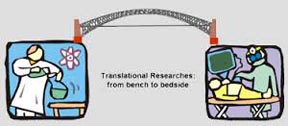
Hopefully involvement in the OSRT research and writing activities will inspire you to make a difference and help the radiologic science professions grow through your contributions to original research, writing, and publication. The OSRT has many talented and passionate members that would excel at research and writing. The OSRT will be offering a variety of virtual and face-to-face educational experiences to help you begin to cultivate these skills!
Check out these resources:
OSRT Education and Reseach Foundation Grants
NIH Research Matters- A Weekly Update of Research Advances
ASRT Education and Research Foundation Page
AAPM CARES is an engaged community of stakeholders committed to Communicating Advances in Radiation Education for Shielding (CARES).
Join the current conversations about the role of patient gonadal and fetal Shielding in Radiology. A set of six modules provide information about the history of patient gonadal and fetal shielding, the scientific basis for its widespread implementation in the 20th century, and the science behind recommneded current practice changes. Patient shielding will be discussed with the context of image quality and dose optimization in radiographic imaging, including patient positioning and collimation. Anyone can view these six modules!
Click the link to the six modules. You will be taken to the American Association of Physicists in Medicine (AAPM) page where you will see the six modules listed for your review.
Kent State University-Ashtabula: Program Director Wanted
3300 Lake Road West
Ashtabula, Ohio 44004
440-964-4577
Contact:
Radiologic Technologist Program Director Position Description
Direct all operational, administrative, instructional, and financial activities of Radiologic Technology program. Develop and market program. Oversee program budget. Develop and/or revise program policies and procedures. Identify and secure program funding opportunities. Establish objectives and develop strategies for achieving objectives. Evaluate and implement changes to programs. Serve as liaison to various constituent groups relative to program activities, and serve on various University committees. Teach up to three 3-hour courses (or equivalent) per academic year. May provide leadership of a small department, unit, or major function and/or provide direct supervision over administrative/professional employees. Meet acreditation standards and hold required Ohio licensure and professional credentials.
AAPM - American Association of Physicists in Medicine
ACR - American College of Radiology
ASRT - American Society of Radiologic Technologists
ASRT - Legislative News
ASTRO- American Society of Therapeutic Radiology & Oncology
ARIN - Association for Radiologic & Imaging Nursing
AEIRS - Association of Educators in Radiological Sciences
AHRA - Association of Healthcare Radiology Administrators
ARRT - American Registry of Radiologic Technologist
ARDMS - American Registry of Diagnostic Medical Sonographers
ARRS - American Roentgen Ray Society
CDC - Center for Disease Control & Prevention
FDA - Food and Drug Administration
ISCD - International Society of Clinical Densitometry
ISMRM - International Society for Magnetic Resonance in Medicine
ISR - International Society of Radiology
JRCERT - Joint Review Committee on Education in Radiologic Technology
NCI - National Cancer Institute
NIH - National Institute of Health
NRC - U.S. Nuclear Regulatory Commission
ODH - Ohio Department of Health Home Page
ODH - ODH Radiologic Licensure Program
OSHA - Occupational Safety and Health Administration
Online Radiology Resource - LearningRadiology
RRS - Radiation Research Society
RSNA - Radiological Society of North America
SNMMI - Society of Nuclear Medicine and Molecular Imaging
SPR - Society of Pediatric Radiology
SCVIR - Society of Cardiovascular & Interventional Radiography
SCMR - Society for Cardiovascular Magnetic Resonance
SDMS - Society of Diagnostic Medical Sonographers